


In one of the most remarkable political turnarounds we’ve seen, on April 28, 2025, Mark Carney of Canada’s Liberal Party won the election to continue serving as Canada’s Prime Minister.
In January of 2025, it appeared the conservatives would win the federal elections in a landslide, but support for the liberal party surged as U.S. President Donald Trump began trolling Canada by calling it the “51st State” and calling former Canadian Prime Minister Justin Trudeau “Governor Trudeau.” The result was a come-from-behind win for the Liberals that only Doomberg saw coming.

While we think some of Trump’s antics were entertaining, we can’t help but wonder why he would want to inherit the aging population, high government debt, and low per-capita incomes plaguing Eastern Canadian provinces, like Quebec. For our money, we want to skim the cream from the top and just offer statehood to the thriving province of Alberta instead.
Alberta Could Be Open To It
Similar to how election victories for Republicans prompt discussions about California leaving the Union, and Democrat victories prompt the same in Texas, Carney’s election victory is reigniting tensions among Western Canadians who feel alienated by Liberal Party policies that unfairly punish energy development in Western Canada and favor the Eastern Provinces.
Just days after the election, hundreds of people attended a Rally for Alberta Independence at the Alberta Legislature in Edmonton to voice their support for separating from Canada.
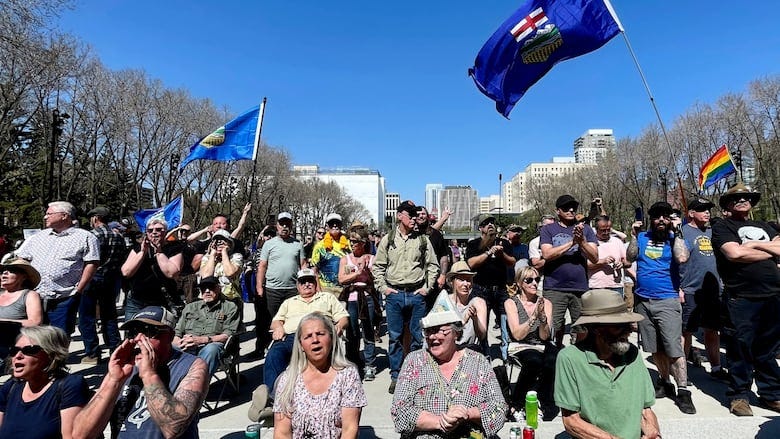
Unlike the United States, where we fought a war over the idea of states leaving the Union, secession in Canada seems to be more acceptable. Quebec has held two referendums on sovereignty, aiming to leave Canada: one in 1980 and another in 1995.
The idea of Albertan independence seems to be more plausible today than it was before the election, as Alberta’s Premier, Danielle Smith, stated that she would hold a referendum on separation in 2026 if such a petition gains enough signatures to be placed on the ballot.
On a related note, lawmakers from Alberta’s conservative party have proposed legislation making such a referendum easier to get on the ballot, reducing the number of signatures required to place a referendum on the ballot from 20 percent of all registered voters province-wide, to 10 percent of voters who cast a ballot in the last general election.
If Alberta does, in fact, take steps to leave Canada, we believe the United States should pull out all the stops to welcome an independent Alberta to America to create a More Perfect Union.
Doing so would benefit Albertans by freeing them from Canada’s punitive policies toward energy development and allowing Alberta taxpayers to keep more of the money they earn. By admitting Alberta to the United States, in return, America would secure access to Alberta’s vast energy resources and gain one of the most beautiful places in North America.
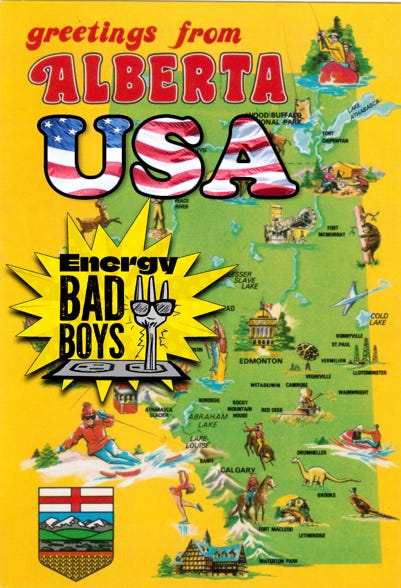
America, Meet Alberta
Alberta is a Western province in Canada that borders the state of Montana. It’s home to 4.9 million people, most of whom live in the major cities of Calgary (the home of the 1988 Winter Olympics) and Edmonton.

In many ways, Alberta is the Texas of Canada.
It’s massive in size. At 255,000 square miles, it’s only 5 percent smaller than Texas. Alberta is also home to the world’s largest outdoor rodeo, the Calgary Stampede. We are reliably informed that the Stampede is really a week-long binge-drinking extravaganza party masquerading as a sporting event.
Like Texas, Alberta has a thriving economy that allows it to boast the highest gross domestic product (GDP) per capita among any Canadian province. The graph below shows Albertans produced 73 percent more than Canadians living in Prince Edward Island and 48 percent more than residents of Quebec.
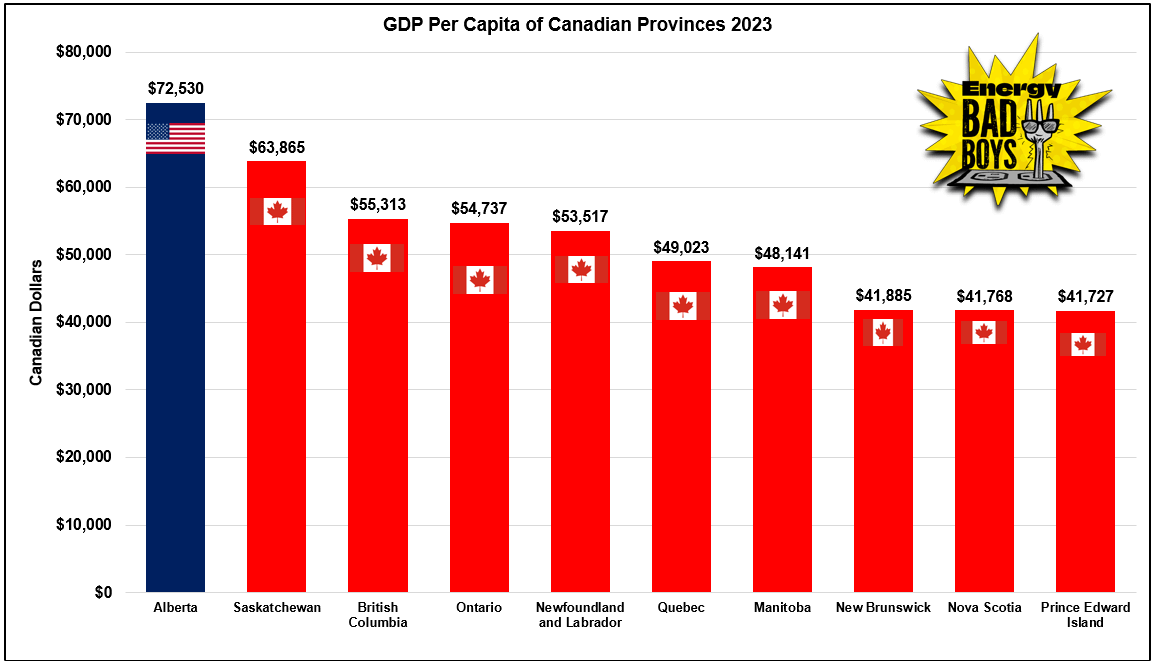
According to a report from the Fraser Institute, Alberta led all provinces in GDP per capita growth, private sector employment growth, in-migration, and business investment per private sector worker, placing second in its share of Canadian private sector jobs created.
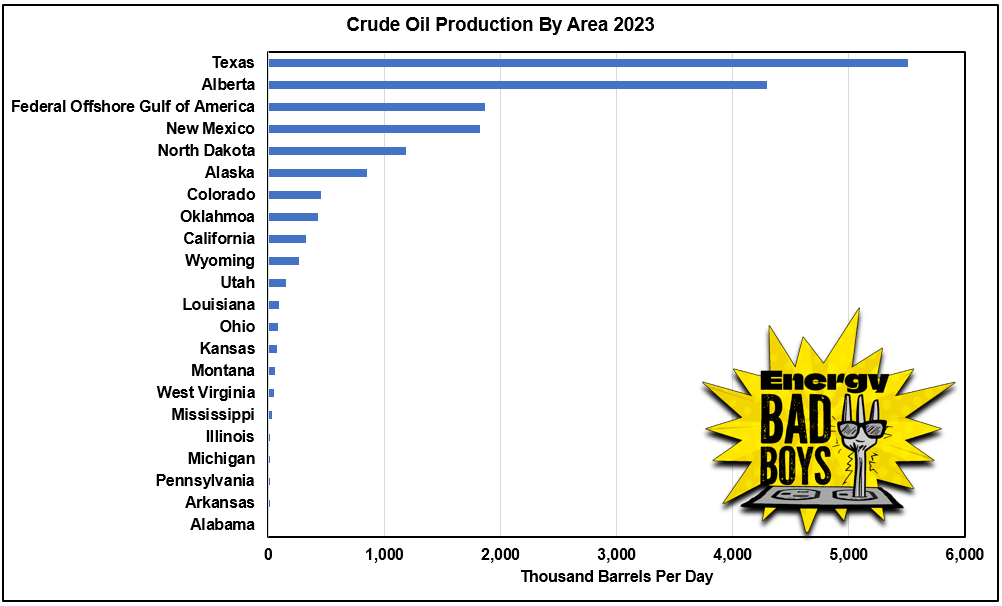
Alberta’s economy is so productive because it’s a major oil and natural gas producer. In 2023, Alberta produced 4.3 million barrels of oil per day, accounting for 84 percent of Canada’s oil production. It also produced 10.9 billion cubic feet of natural gas per day, which was 61 percent of Canada’s gas production that year.
For context, Alberta would have been the second-largest oil-producing state in America in 2023 by a wide margin, producing twice as much oil as New Mexico and 3.6 times more oil than North Dakota. If it were a state, it would be the fourth-largest natural gas producer.
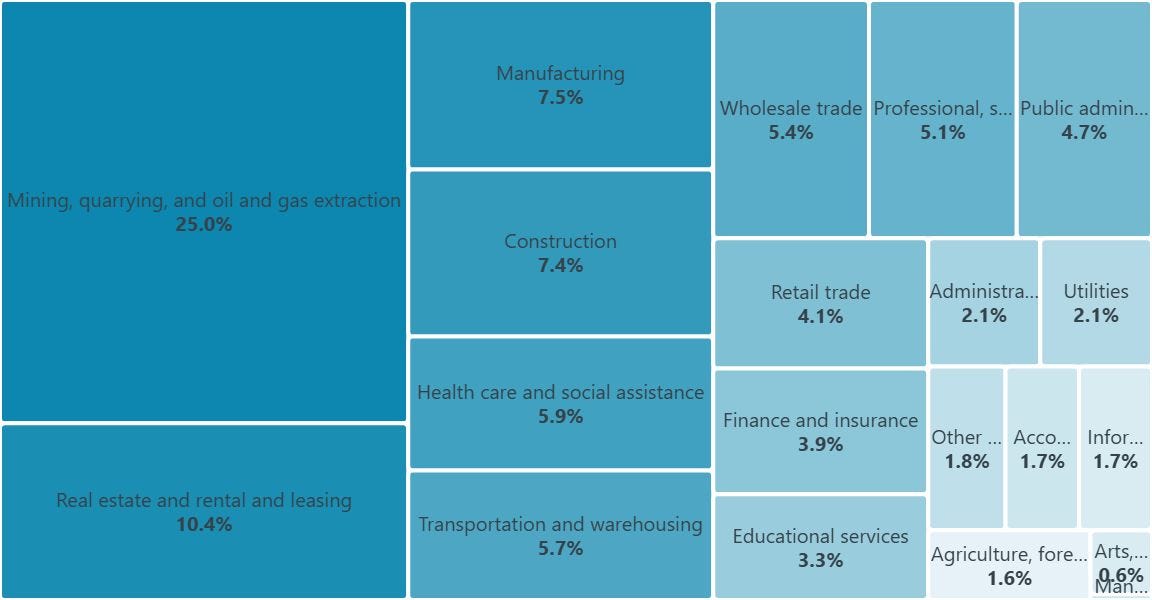
It should be no surprise that energy production is a cornerstone of Alberta’s economy. Government statistics show the mining, quarrying, and oil and gas extraction sector makes up 25 percent of provincial GDP.
Furthermore, Alberta's oil sands, which are responsible for 75 percent of the province’s oil production, are the fourth-largest proven oil reserves in the world after those held by Venezuela, Saudi Arabia, and Iran, suggesting a long runway for natural resource development if government regulations don’t get in the way.
Beyond Energy
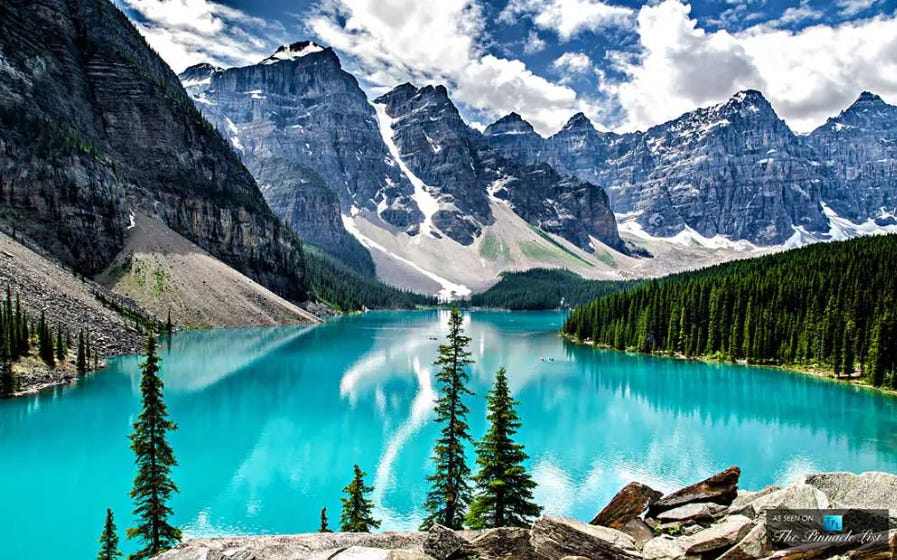
In addition to being an energy powerhouse, Alberta is stunningly beautiful.
It’s home to Banff and Jasper National Parks in the Canadian Rockies, providing some of the world’s best hiking, camping, and skiing opportunities. The picture below is of Lake Louise, a world-famous tourist attraction for obvious reasons. If you’ve never been to the Canadian Rockies, it’s high time you booked a trip.
What’s in it for Alberta?
While Alberta is doing well relative to its provincial peers, many Albertans believe they could be doing better.
Federal policies enacted by the Canadian Parliament have hampered Alberta’s ability to produce and transport energy, and the good people of Alberta are subject to high federal taxes that are then redistributed to folks living in other provinces under a regime called “equalization payments.”
No More Equalization Payments: No Good Deed Goes Unpunished
Unfortunately for our friends in Alberta, their strong economic performance means they pay more in taxes than residents of any other province. The Fraser Institute notes that Albertans pay more per capita taxes than any other province, paying an average of $11,568 (Canadian) per person.
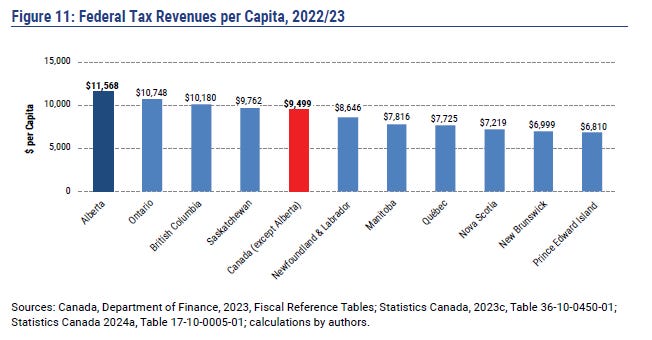
As a result, Albertans contributed $60.4 billion to federal revenues. However, the province received only $46.1 billion back in federal spending, meaning Albertans provided a net surplus of $14.25 billion to the federal coffers.
Much of this money is spent on funding normal federal government priorities that all Canadians receive, and transfer payments like Canada’s health system or its version of Social Security. However, another pot of money called an “equalization payment” is a no-strings-attached cash transfer from the federal government to provinces that pay less money in taxes.
The graph below shows the per capita distributions of these equalization payments for the 2024-2025 years. In essence, taxpayers in Alberta, British Columbia, and Saskatchewan are subsidizing the provincial governments of the remaining provinces, which you can see in the graph below.
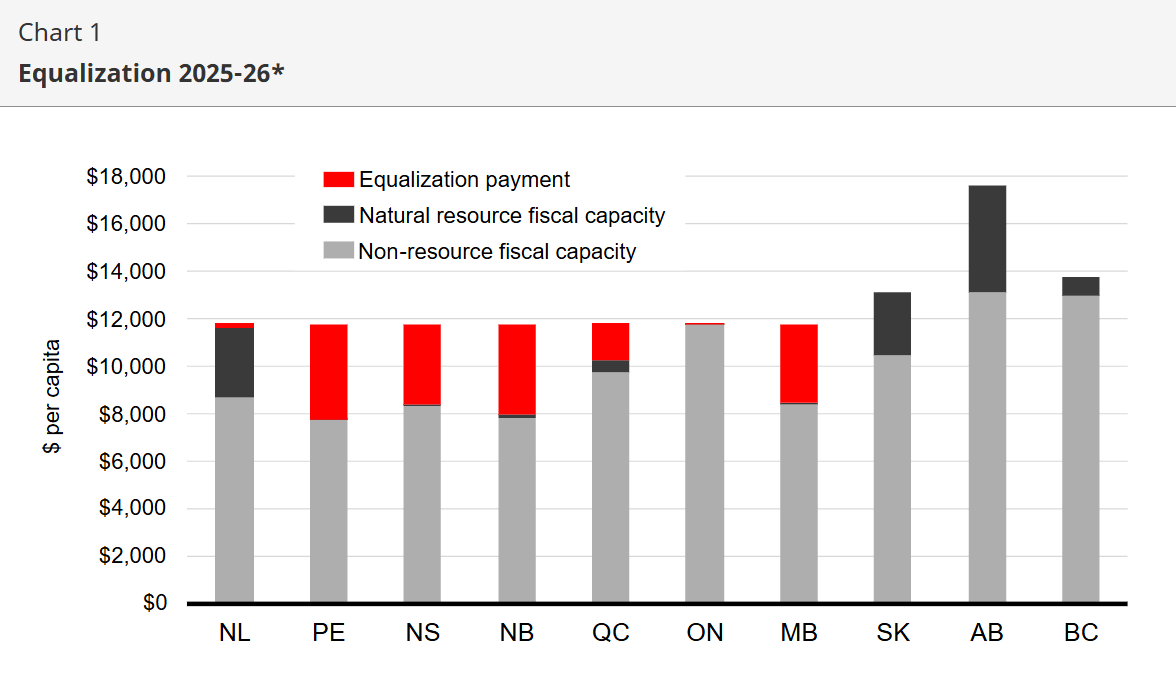
Without equalization payments to make, Alberta could focus more resources on its own public policy priorities, like addressing their housing shortage, or just leave more money in the pockets of Albertans to spend and invest as they see fit.
Let’s Get Albertans a Stanley Cup!
As an aside, some believe that Canada’s high taxes are one reason why no Canadian hockey team has won the Stanley Cup since 1993, whereas U.S. teams in low-tax states like Florida and Nevada have won four out of the last five championships. The math is pretty simple: hockey teams in low-tax states offer more after-tax income to players, and as a result, they are able to attract more talent for a lower salary cap cost.
Freed from the burden of equalization payments, maybe the Oilers or Flames could hoist the Cup.

Removing Impediments to Energy Development
Not only do Albertans finance the spending of other provinces, but over the last several years, many of those same provinces have helped impose federal energy regulations that have harmed Alberta’s ability to produce and transport the oil and gas that fund much of the rest of Canada.
For example, multiple oil pipelines within Canada have been canceled due to the climate policies like Bill C-69, dubbed the “no more pipelines bill,” enacted by Governor Trudeau.
In 2016, Trudeau’s government canceled the permits for the Northern Gateway project. This pipeline was proposed by Enbridge in 2006 to carry oil from Alberta to British Columbia's northwest coast.
In 2017, the Energy East pipeline—a proposed C$15.7-billion project (US$11.0 billion that would have carried oil cross-country from Alberta to the Atlantic province of New Brunswick—was canceled because the National Energy Board (NEB) changed its permitting conditions to include upstream and downstream greenhouse gas emissions, a change seen by many in Alberta as moving the goalposts.
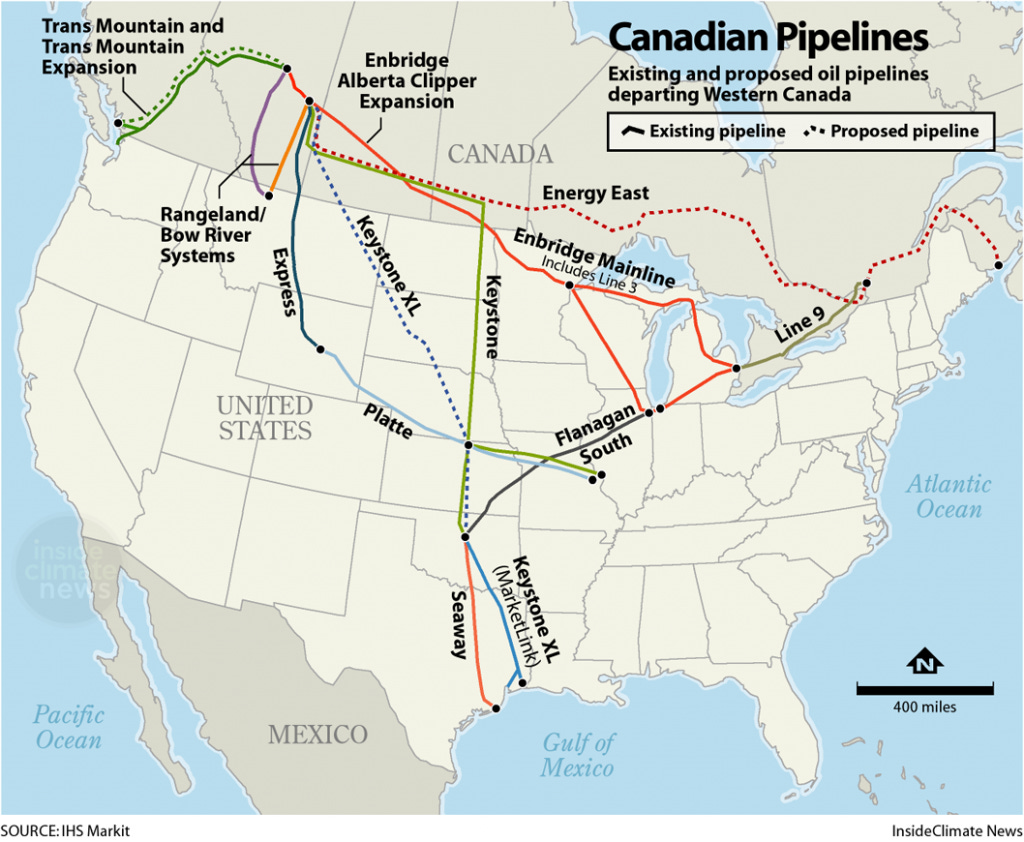
More recently, in 2021, the Keystone XL pipeline was canceled by President Biden on his first day in office. The pipeline would have carried oil from the oilsands of northern Alberta to the major U.S. crude storage hub at Cushing, Oklahoma, and then on to U.S. Gulf Coast refineries.
If Alberta were to join the United States, it would pave the way for the Keystone XL pipeline because the pipeline would no longer need cross-border permits from the U.S. State Department. These cross-border permits were revoked by both President Obama and President Biden to delay, and ultimately kill, the Keystone XL pipeline.
However, if there are no borders to cross, there are no cross-border permits to revoke, and the crude from the 51st state could flow to the rest of the U.S.
Conclusion
Admitting Alberta to the Union would be a massive win for American energy security, and it would also emancipate Albertan energy producers from ever-more restrictive regulations on their industry and free Alberta taxpayers from funding Eastern provinces through equalization payments.
The move would be a win-win for Alberta and the U.S., but the road to Albertan independence would be a long one.
However, those petitioning to get the referendum on the ballot, the first of many steps to independence, probably wouldn’t hurt their chances by making the connection between independence and finally getting the Oilers or the Flames a Stanley Cup.
Hopefully, someday during our lifetimes, we will be talking about the Great State of Alberta.
Click like, share, and subscribe, or you’ll be sent to live in Quebec.


The Grid Needs Inertia, Not Spin by The Brawl Street Journal
Another Trillion for the Grid by Irina Slav
It’s Okay to Notice When Solar and Wind Fail by The Breakthrough Journal
I think Alberta would do better to stay independent, should the initiative succeed. The only advantage to joining the USA would be the simplification of cross-border pipeline permits, but the disadvantage would be to saddle Alberta with the USA regulatory framework.
Why not stay independent, and run with a light regulatory framework -- ditch Canada's insanity and stay immune from the USA's regulations as well. While the USA may be energy friendly today, that could easily change in a few years. Almost 50% of the population voted for Harris for some reason.
As long as the regulatory environment in the USA stays energy friendly, then cross-border permitting should be relatively easy. If the USA goes back to energy hostile, then Alberta surely does not want to be a part of that.
Alberta is land locked, so defense is unlikely to be a concern, unless Canada turns mean.
Finally, Alberta joining the USA would not be good for the USA. Alberta may be the most conservative patch of Canada, but compared to states in the USA, Alberta is a cesspit of raging liberals.
Alberta’s secession movement will surely accelerate if the rest of Canada keeps talking about joining the EU